

Phase One
A pilot restoration site designed to demonstrate accelerated rainforest recovery in the most degraded landscapes of the Amazon.
Where and Why
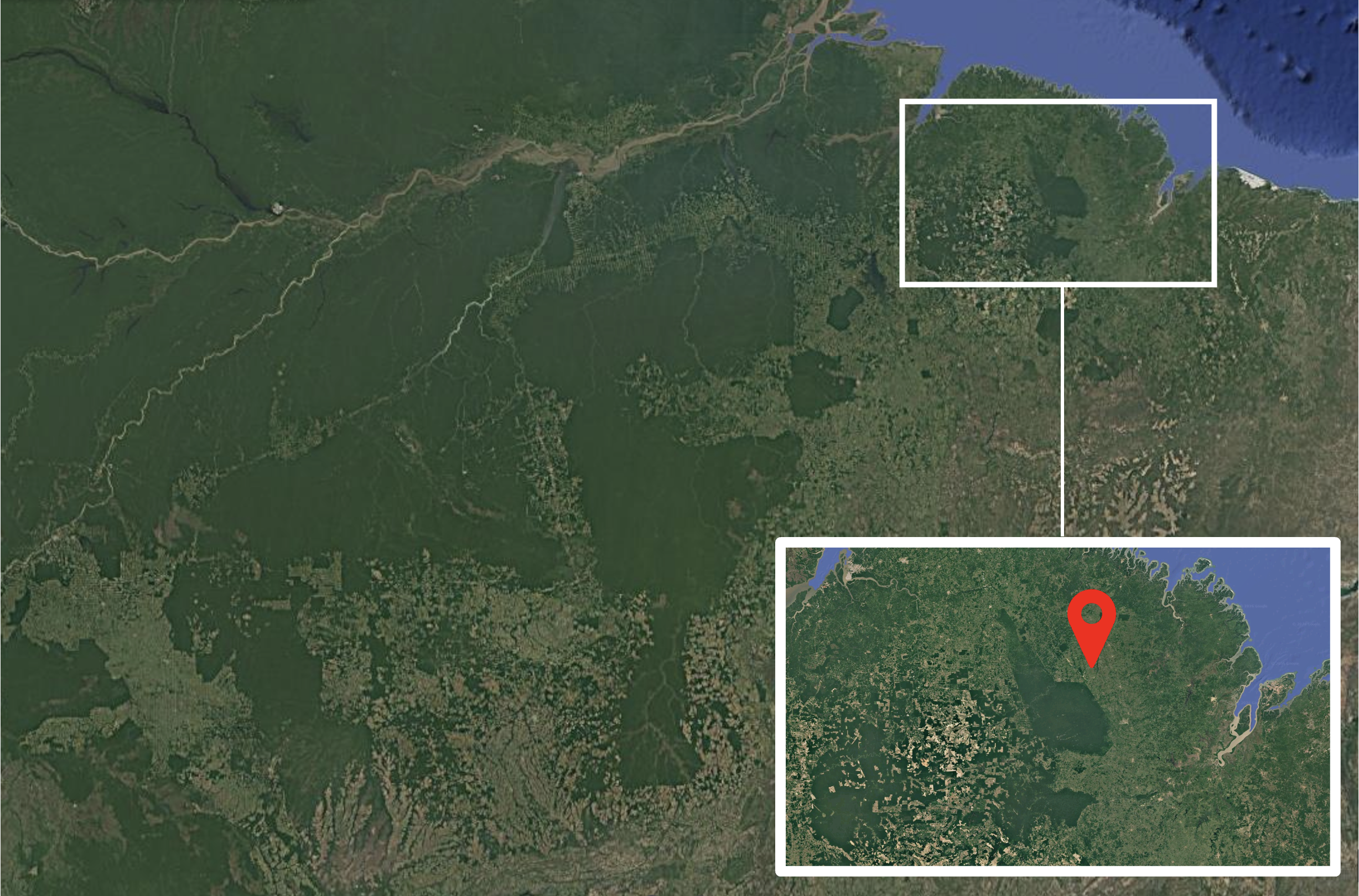
Phase One is located in the state of Maranhão, in north-eastern Brazil, along the Amazon’s arc of deforestation.
This region is representative of the most difficult conditions facing tropical forest restoration today: severely degraded soils, prolonged dry seasons, intense solar exposure, and high rates of tree mortality. These conditions make Maranhão a critical testing ground — not because restoration is easy here, but because success here demonstrates what is possible elsewhere.
By working in a landscape where conventional reforestation has repeatedly struggled, Phase One is designed to generate a blueprint for restoring similarly degraded, savannising rainforest regions across the Amazon and beyond.
What Phase One Puts in Place
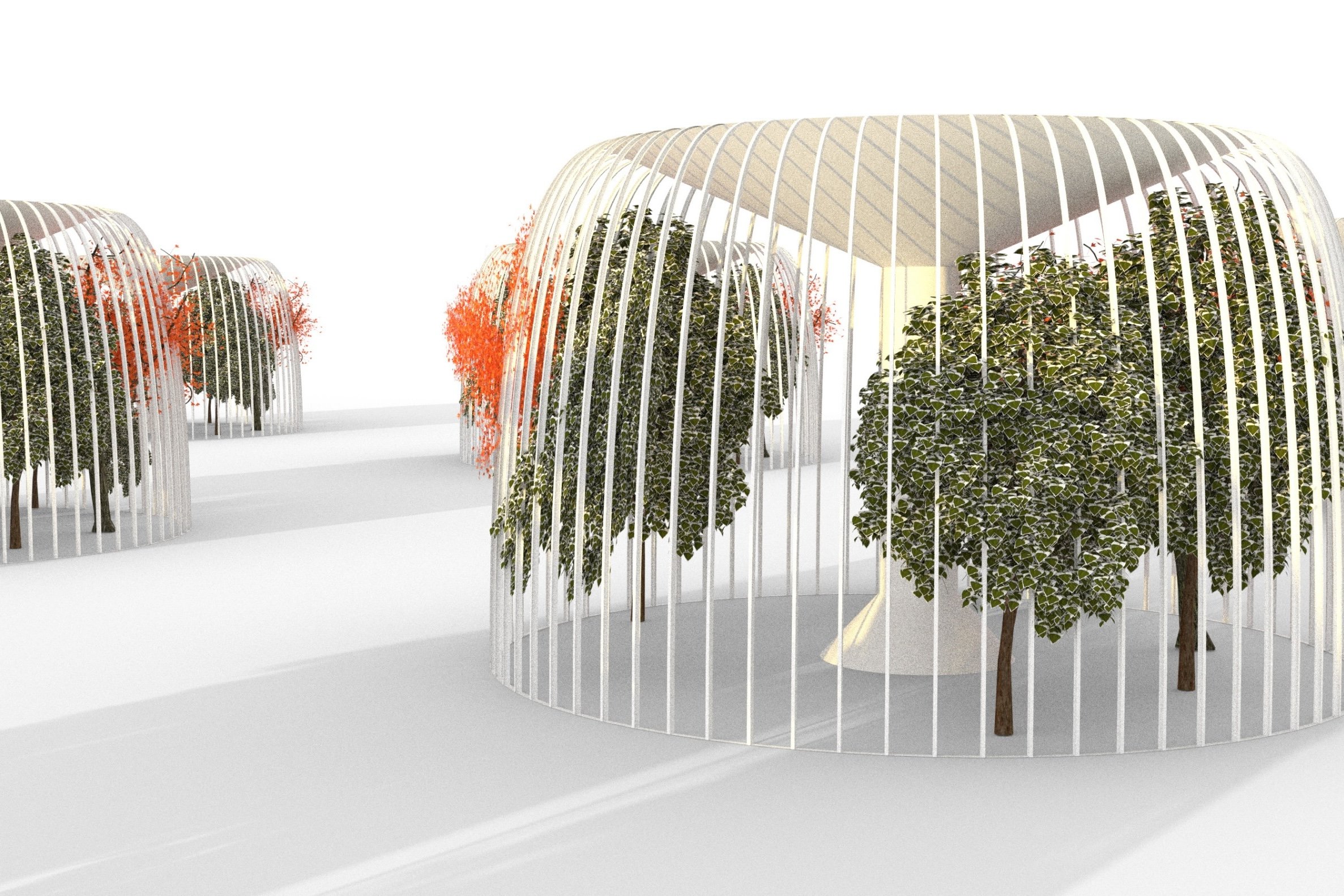
Phase One centres on the establishment of a one-hectare pilot restoration site supported by five Guardian structures.
These structures form the backbone of an integrated restoration system designed to rapidly recreate the ecological conditions required for forest recovery. Around and between the Guardians, water capture and retention systems will be established to maximise land hydration — a critical constraint in degraded, drying landscapes along the arc of deforestation.
Across the hectare, approximately 5,000 native plants representing more than 100 species will be established. Planting is deliberately diverse and spatially structured, combining shade-tolerant, water-dependent, and sun-adapted species both beneath the Guardian canopies and in surrounding open areas.
Together, these elements create a protected, hydrated, and biodiverse regeneration matrix rather than isolated planting plots.
A Hectare-Scale Regeneration Laboratory
Phase One is designed as a hectare-scale regeneration laboratory.
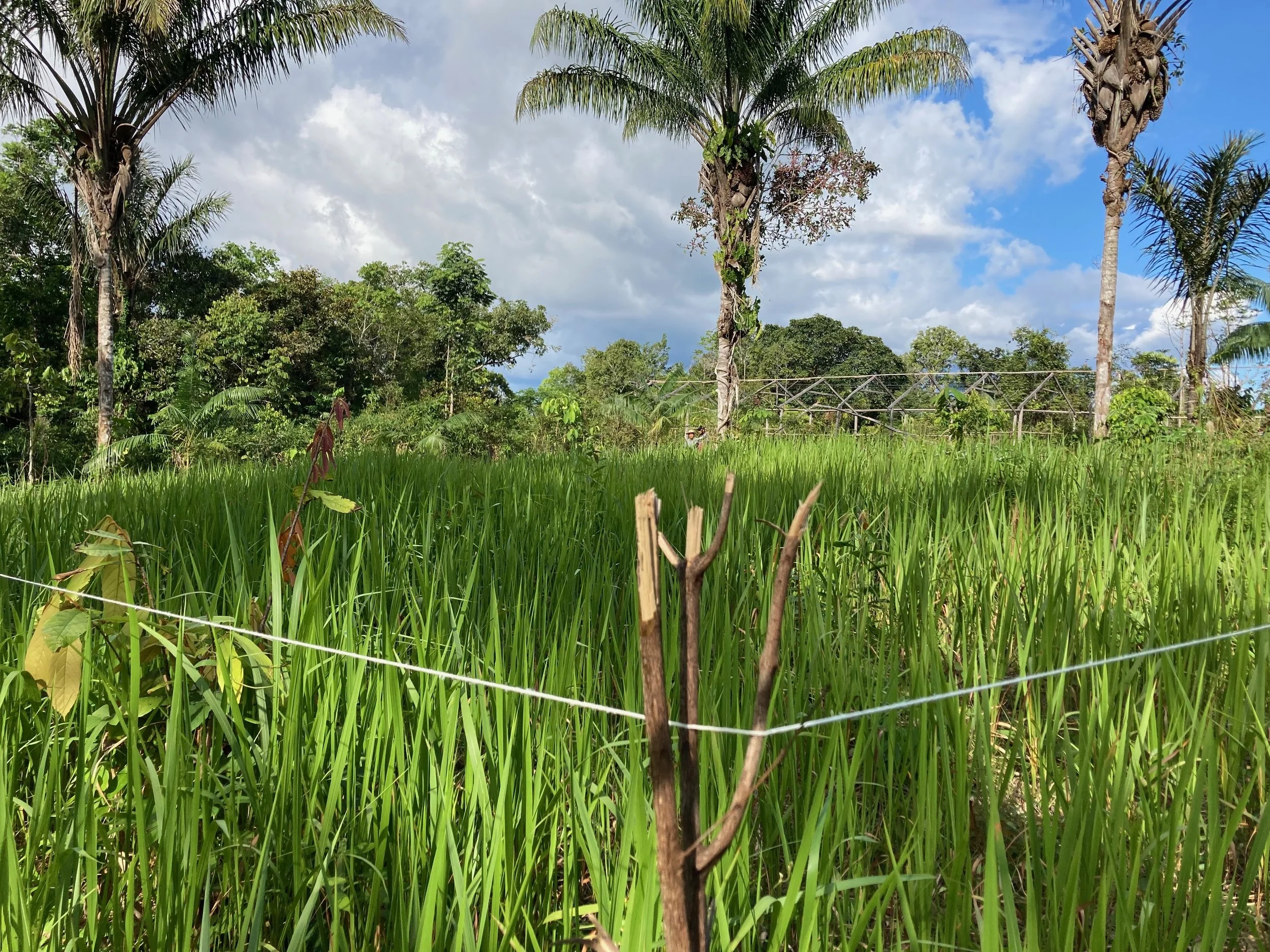
Within the same site, multiple ecological restoration approaches will be implemented and observed, including reforestation, direct seeding, assisted natural regeneration, agroforestry, silviculture, and silvopastoral systems. Some Guardian zones will prioritise biodiversity recovery, while others explore productive configurations compatible with long-term forest health.
These approaches are not pursued as ends in themselves, but as comparative pathways toward the same objective: the rapid re-establishment of a resilient, self-sustaining rainforest ecosystem.
By testing complementary methods within a single, controlled landscape, Phase One generates practical insight into how accelerated restoration can be adapted to different ecological, social, and economic contexts.
Timeline and Indicators of Success
Phase One is structured as a three-year implementation and validation period.
During this time, the Guardian structures will be built and deployed, water systems established, and native planting completed. From the earliest stages, ecological indicators will be monitored by local ecological expertise to track soil recovery, vegetation establishment, water retention, and species recruitment.
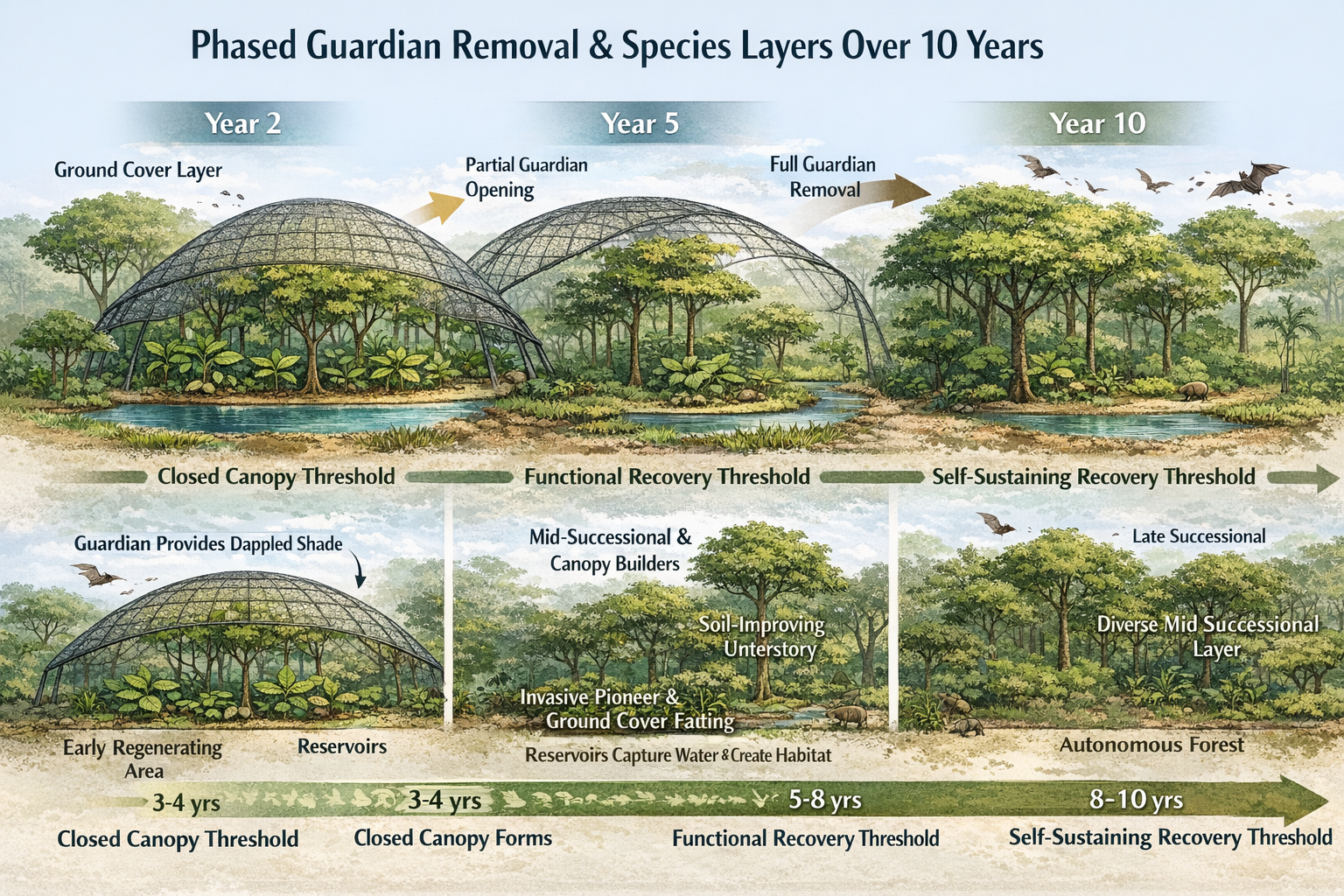
Crucially, the effectiveness of the Guardian system does not require waiting decades to assess. Within three years, clear indicators will show whether forest recovery is on a successful trajectory — demonstrating that the conditions necessary for long-term regeneration have been restored.
The Guardian systems remain in place beyond Phase One, continuing to support recovery as the site progresses toward full canopy formation over the following years.
What Phase One Enables
Phase One establishes proof — ecological, practical, and operational — that severely degraded rainforest landscapes can be guided back toward recovery in a fraction of the time typically required.
By demonstrating accelerated regeneration at the hectare scale, the project creates a replicable template for wider application: one that integrates ecological restoration, water management, biodiversity recovery, and long-term resilience.
This foundation enables the next phase of the project: scaling Guardian-supported restoration to protect larger areas of the Amazon and other vulnerable tropical forests worldwide.